We have a choice. Despite being told AI will make our lives magical, we don’t have to consume art made by this dark sorcery. Because when it comes to art, those who have always counted beans and thought that made them creative geniuses are just outsourcing their own imagination deficits.
As Leonard Sultana, an acquaintance of mine, wrote recently on Threads, “they mistake output for creation.”
With my harshest grousing out of the way, let’s acknowledge that more than a year after the last time I wrote about an AI project, we’re still getting more hype than real threat to human creativity. Puck editor Matthew Belloni acknowledged as much this week in a brief piece on virtual actor Tilly Norwood –
“No, there was never a major talent agency frenzy to sign the A.I. “actress.” But that didn’t stop the media from writing about Tilly pretty constantly.“
I’d calmed a few friends down about that when the news first broke. It did sound scary for actors. But aside from articles touting her, the only people excited about “Tilly” were their creators, a company called Particle6 whose founder Eline van der Velden sure knew how to play the media.
Because just as we’ve seen in politics, fear and outrage get a lot more clicks and attention than truth.
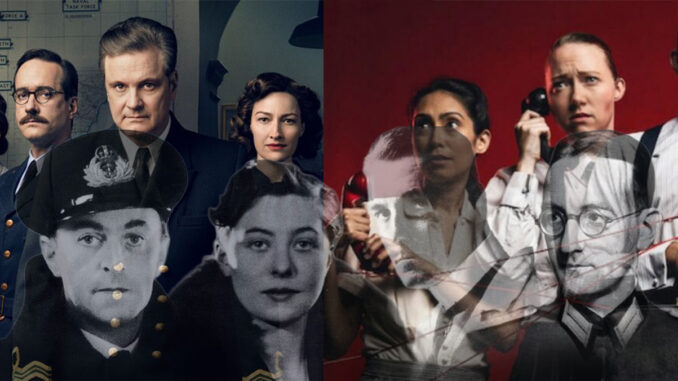
Truly human creativity still wins. Case in point – the World War II British deception operation known as Operation Mincemeat. Sure, that was pretty creative, but I want to focus on the art inspired by it as a result of certain declassification in the 21st century.
If you don’t know the story, the headline is that British Intelligence found the corpse of a Welshman who had eaten rat poison, created a fake identity for him as an officer in the Royal Marines, and released the corpse off the coast of Spain, loaded with fake plans for an invasion of Sardinia. After much spy craft and honestly arrogance on everyone’s part, Hitler was fooled and the allies were able to land in Sicily with little resistance.
It’s insane. It’s true. And it’s inspired at least one play, two musicals, and a few movies. Also, did I mention that though his contributions are argued, James Bond creator Ian Fleming was involved? You can’t make this up.
Which is also a line of dialogue from the most recent musical, the Tony Award-winning Operation Mincemeat. I’m getting to what this has to do with AI.
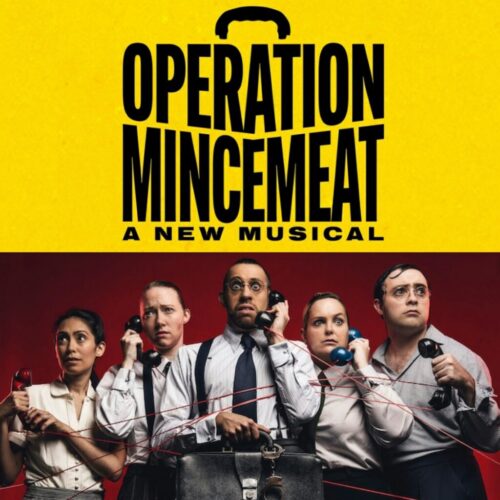
Last May, I saw Operation Mincemeat on Broadway and laughed so hard I couldn’t breathe in a couple of moments. Performed by 5 actors ignoring gender in dozens of roles, it’s dazzling. It’s human. It’s inspiring, moving, and hilarious. Let me back up and reiterate: it’s human.
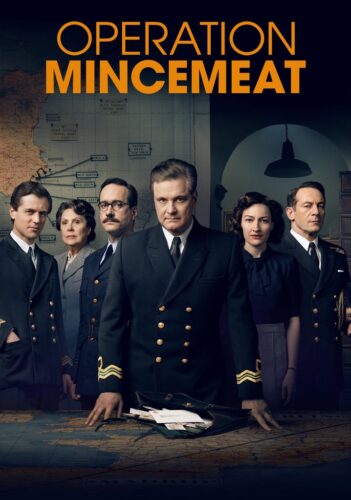
After seeing it, I did what I tend to do when really inspired: went down a rabbit hole. My wife and I discovered that a couple of years ago, Netflix had released a drama telling the same story, also titled Operation Mincemeat. Watching that inspired this article, and it’s been a long time boiling.
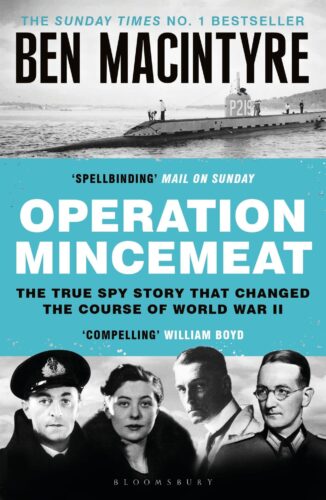
Before I could write this, I had to read the book with the most up-to-date declassified information, Ben Macintyre’s Operation Mincemeat, so I’d know where liberties were taken.
Despite an impressive dramatic pedigree, the film Operation Mincemeat smacks of studio notes. You can see where the script was guided away from unbelievable historical events toward dramatic clichés. That’s not to slag on screenwriter Michelle Ashford or director John Madden. It just feels edited to the lowest common denominator, and I don’t know what Ashford’s original screenplay reads like. Though the resulting film retains a sense of the audacity of the actual operation, it’s plodding.
Not that the musical doesn’t take some liberties. It does. But its narrative reflects more of the absolutely crazy things that did happen. It knows when to break the comedy and acknowledge the humanity. More importantly, it knows when to acknowledge Glyndwr Michael, the corpse, and bring us all together to mourn a man whose death helped defeat the Nazis. For a time.
Macintyre took dry military records and diaries and wrote them into a compelling non-fiction book. The comedy troupe SplitLip (David Cumming, Felix Hagan, Natasha Hodgson, and Zoë Roberts) took inspiration from it and created art that illuminates the truth. The film, however, tends toward mediocrity, choices made (or studio noted) into what fits within the norm of audience expectation.
Does that sound a bit like creation by algorithm?
The point being that such mediocrity has always been in the arts. What rises, what endures, isn’t necessarily the stuff designed to be the most crowd-friendly. Without Sinners or Weapons, it’s doubtful that an AI would come up with a scenario as original as Sinners or Weapons. But I’ll bet there are studio executives playing around with ChatGPT or a reasonable facsimile trying to match that originality. But if they really could, they’d actually write it.
To riff off of William Goldman, “…nobody knows anything.” But from the beginning of film and television studios, executives have been absolutely convinced they do. (Some may even have been right.) Now they have a tool that masquerades as knowing everything.
But it doesn’t. It can’t do true thinking. And it’s only as good as its input. Which takes me back to Sultana’s comment. Don’t mistake output for creation.
That also takes us back to – it’s still your choice. You can still not buy into the AI hype. Clearly, would-be comics creators didn’t buy into it last year, so Colin Kaepernick’s AI company has pivoted to education. (I won’t comment further on that until I’ve talked to a few people still teaching to see if they like it.)
AI will get better. That doesn’t mean we have to accept it in our arts and entertainment.
Side note: Operation Mincemeat also inspired a fun and somewhat bizarre limited series from Titan Comics. Cynthia von Buhler’s Minky Woodcock: The Girl Called Cthulhu offers a very roundabout way into the historical event. I’m pretty sure it’s not true, but it’s not the craziest thing about the operation.
The true will set us free.
Fanboy Planet does not use AI in its production, not even AI options in Photoshop. It’s all painstakingly and awkwardly done by a human using Photoshop.
Fanboy Planet is affiliated with Bookshop.org and Amazon. Purchases made through links on this and other sites may generate a commission for this site.